Showing posts with label history. Show all posts

Monday, July 16, 2012

Food For Thought - Funeral Dress

WARNING: This post contains images of bones, mummies, and other death-related things that some readers may find disturbing. If you'd like to read this post without pictures, please click here.

Everyone dies, and we've all probably thought a bit about what we want our loved ones to do with our remains. However, of all the arrangements we think about, furthest from my mind would be the clothes I'd be buried in. Even further from my mind would be the idea of being disinterred for the purposes of historical studies.

Of course, most of us are probably nowhere near as famous as, say, Eleanor of Toledo, who married Cosimo I de' Medici in 1539, effectively paving the way for the Medici's reign and is credited with being the first modern First Lady. She died in 1562 and was buried in this dress:


When the Medici tomb was opened in 1857, this was one of the artifacts recovered. You can read more about it and other 16th century funeral dresses here.
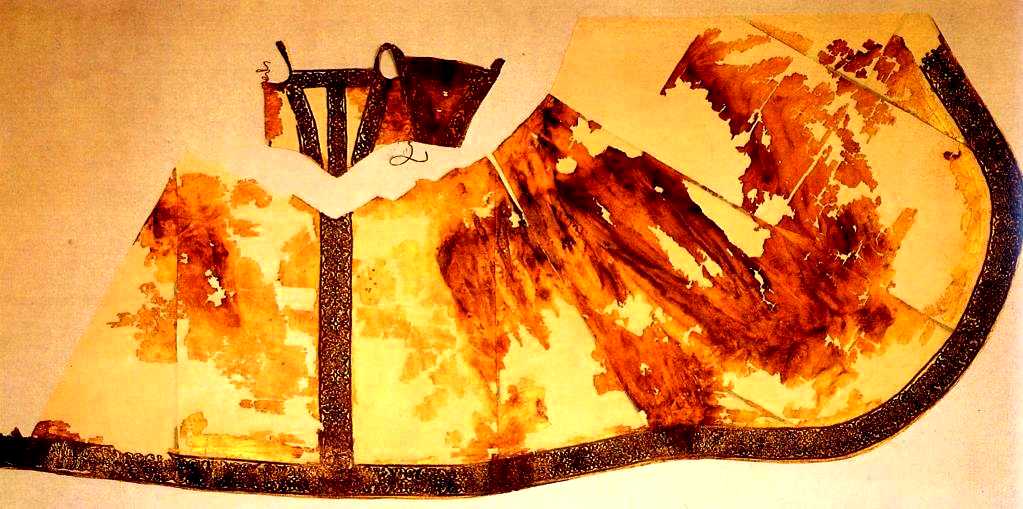
The extant dress, complete with lovely liquefied flesh stains.
Of course, we have always turned to burial sites and tombs as insights into cultures past. In some cases, these sites remain some of the last undisturbed sources of historical artifacts. However, when disturbing the rest of the dead, what (if any) rules should be followed? Is there a time limit before it becomes creepy? Is it ever okay to dig up the dead for the sake of posterity?

"This is totally for posterity. We swear."
I suppose that in the presence of plunderers and grave robbers it's better for archaeologists to do it methodically and respectfully. If it will be done by hoodlums better to have the items preserved in a museum and used to learn new things about cultures past. I guess if you decided to be buried with all kinds of crazy riches, that sort of thing is to be expected. There's bound to be at least person who adopts the "You Can't Take it With You" way of thinking. In countries like Peru, the sacking of tombs for pottery, jewelry and other artifacts is pretty much commonplace. This industry is sustained by a black market of private collectors and tourists who, despite countless warnings against the destruction of cultural heritage, still buy the stolen goods for the sake of owning a piece of history.

peru 086
The results of grave robbery in Peru
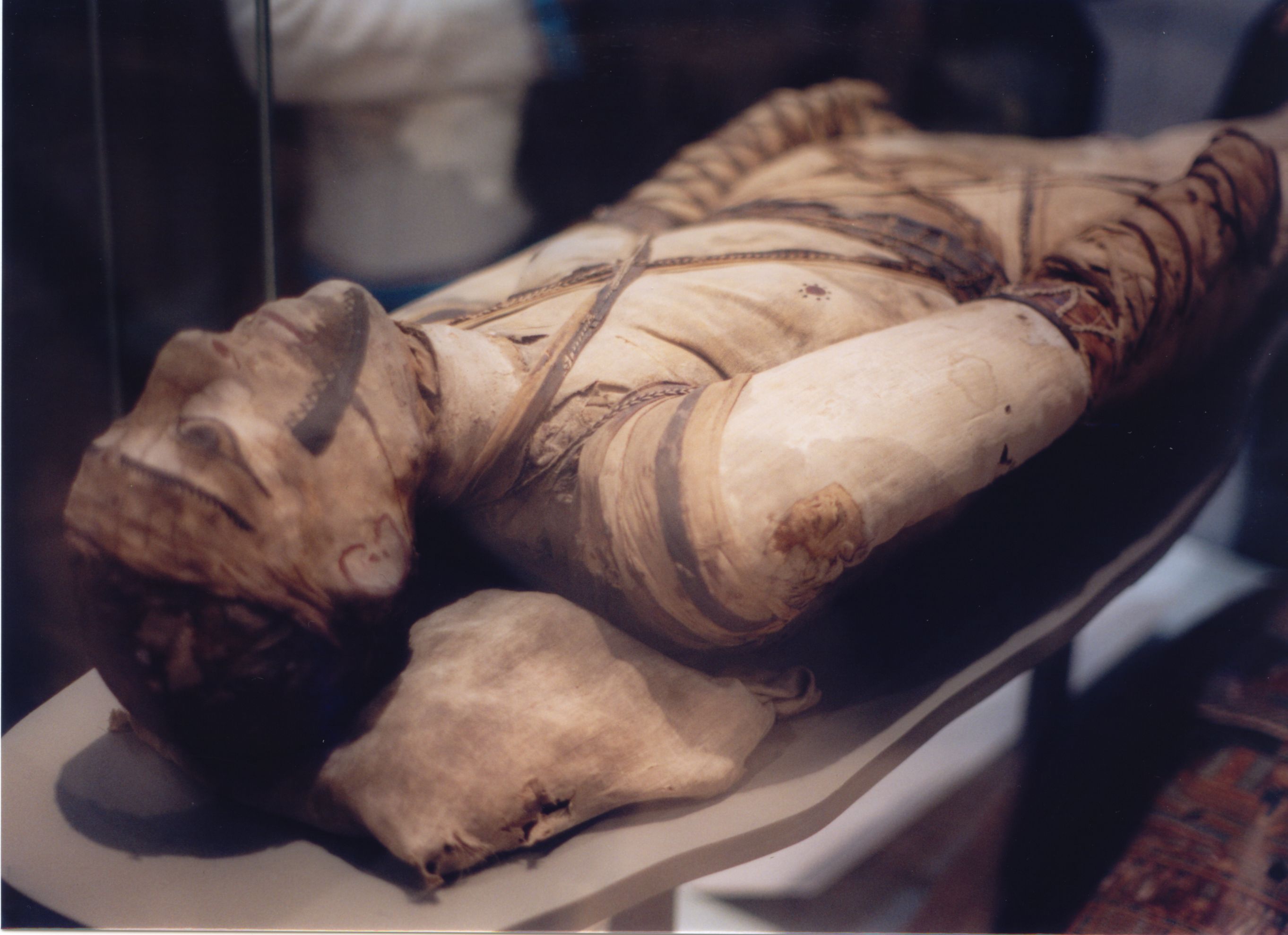
That brings up another point; museums. Is it wrong to display the personal belongings (and even the bodies) of ancient and not-so-ancient peoples? At what point does it cross over from interesting to macabre to show corpses in glass cases? The mummies of Egyptian pharaohs don't seem to bother us too much, but what about the bodies of regular people, mummified naturally and were disinterred between 1865 and 1958 if and when family members were unable to pay the please don't dig up my dead relatives tax. Apparently the bodies were dumped in a warehouse, and the mummified bodies attracted enough attention to eventually warrant the construction of a museum for the corpses. No, seriously.

"Don't mind me, just acting out my last minutes of horror at being buried alive
for the price of admission."
How is this different from viewing the remains of a king? Does him being an important personage make it okay? I've always found museums to be spooky for this very reason: to see a person's entire life on display. Especially when so many different lives (and cultures) are crammed into one building. It must be at the very least bad karma.
"Nah, we're cool."
We don't really think about are adverse conditions in which our own bodies might be freakishly preserved and then put on display like the above-mentioned Mummies of Guanajuanto, so I assume we also wouldn't think about a situation where our entire city might become a walk-through horror show/monument. That's exactly what happened to the people of Pompeii and Herculaneum in 79CE when Mount Vesuvius Erupted and buried large expanses of both cities with unbelievably hot pumice and ash. Those who were unlucky enough to be in the path of this terrifying torrent had their lungs with hot ash with had the charming effect of both burning their lungs like rice paper and suffocating them at the same time. The pyroclastic flow was so fast that most people didn't even have time to react to what was happening to them, and their last moment was preserved long after their bodies had smoldered away, since the very pumice that killed them decided that the awful way in which it killed them wasn't awful enough and decided that preserving their grotesque final expressions was the perfect salt to rub into wound created when their brains exploded from the intense and sudden heat.

Asshole.
When Pompeii and Herculaneum were excavated, one of the archaeologists discovered that by encasing the skeletons they found in concrete, they could fill in the negative space left by the skin and organs to re-create and preserve these people's most terrifying moment.

"Thank God I can stay this way for all eternity."
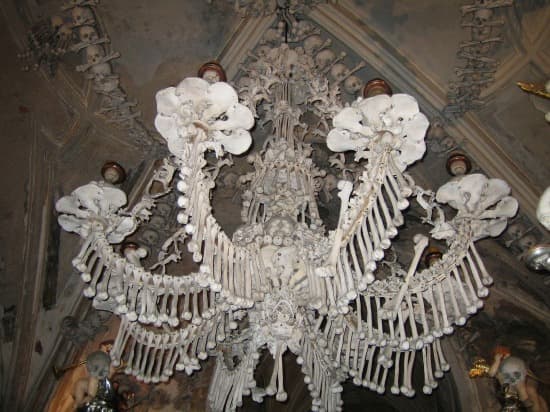
Then we have places like the Sedlec Ossuary in Prague where the remains of between 40,000-70,000 people who died during the Black Plague and Hussite Wars. Oh, but it gets better. When they remodeled the church in the 19th Century, they looked around the Ossuary and thought, "Gee, these bones are a bit of a downer. Hey you, František Rint, can you do something about these bones?"
"That's much better"
Yeah. They basically turned it into the death-obsessed Victorians' wet dream. I don't get it either, but the necessity for burial space during outbreaks of Plagues and other Epidemics seems to be the perfect fodder for horror fests such as these. I remember being coerced into visiting countless catacombs when I lived in Peru.

"I DON'T CARE IF IT'S EMOTIONALLY SCARRING.
I ALREADY BOUGHT YOUR TICKET" (more or less)
Of course, nowadays our history books seems to glaze over a lot of the bits about death and dying and how a good chunk of our historical record of Past Civilizations comes from their tombs. Though I like it a lot more than the outlook we had just over a hundred years ago.

Because we want to remember our daughter as she was,
a lifeless, cold, dead-eyed corpse.
I'm not trying to prove a specific point here, mind you. I'm not trying to say that all museums should be torn down or that studying ancient cultures is wrong. I'm mostly musing. In fact, I'd really like to hear your opinions on the subject. What do you think?

Tuesday, April 10, 2012

Tweets From Titanic

I'd like to think of myself as one of the biggest Titanic fans out there, but it's been a while since I buffed up on my Titanic trivia. Watching the NatGeo special really put me in my place... Besides, I'm sure there are plenty of people out there who are not only bigger fans than I, but will also appreciate my little project for this week: Tweets From Titanic.

In celebration of the 100th Anniversary, I've decided to poke some fun at the tragedy with a series of real-time Tweets from real and fictional Titanic Passengers.

If you'd like to join in on the fun, follow @TwtsFromTitanic and enjoy.

As a disclaimer, I would like to say that though the mood of these tweets will definitely be more tongue-and-cheek, it is not intended to demean or undermine the extreme tragedy of this disaster. So, please take these jokes with a grain of salt.

Stay Tuned for more... Tweets from Titanic!

Tuesday, February 14, 2012

Happy Anna Howard Shaw Day!

I've got a whole bunch of ideas lined up for you guys, but more on those later this week. Today is - you guessed it - Valentine's Day; the day where sweethearts express their love through greetings cards, candy, and flowers!

Nothing like plant genitalia to get you in the mood, am I right? (via)
I figured I'd go the route I've gone for other Holidays and do a retrospective on the history of this "love"-ly day. The feast of St. Valentine was first established by Pope Gelasius I in 469 AD. This feast celebrated only two of many Saints named Valentine; most of whom were persecuted and invariably martyred at the hands of those crazy Pagans: the Romans!

I'm in the mood for looooooove... (via)
Sexy, right? Actually Valentine's Day didn't get its Romantic context until almost a thousand years later in Medieval Europe. The earliest known written link between St. Valentine's Day and Romantic Love is found in the works of Geoffrey Chaucer in the 14th century, when Courtly Love was all the rage.

Porno music not included (via)
Of course, nothing in history is that simple. The true origins of modern Valentine's Day are pretty much unknown to us. I'm sure at least some of you have heard the story of Saint Valentine writing the first Valentine to the blind daughter of his jailer, which apparently made her see again. This has never been historically attested and has probably been attributed to all the different Saints named Valentine in turn.

"In other words, we haven't the foggiest." (via)
Some even speculate that Valentine's Day's romantic connotations were a rediscovery of Ancient Roman and Greek festivals such as Lupercalia, a festival which was supposed to cleanse the City of Rome of evil spirits to promote prosperity in the coming year, and Gamelion, a month set aside by Athenians to honor the sacred marriage of Zeus and Hera. However, these pagan festivities had more to do with ritual sacrifice than Romantic Love...

Isn't it romaaaaaaaaaaaaantiiiiiiiic? (via)

Anyway, somewhere in the Middle Ages people made up an excuse to send each other love letters because, really, what else was there to do in Medieval Europe? Also, considering the little Ice Age that gripped the Western World, February would have been the point in winter where the cabin (or 'castle') fever would have been too much to bear and people would have seriously needed an excuse to take off their clothes. So, that's how it all got started (kind of). The earliest surviving modern 'Valentine' was written by Charles, Duke of Orleans during his captivity in the Tower of London after the Battle of Agincourt. You can read it here.

He's got on his "do-me" robes. (via)
As time passed and industry grew, people began taking advantage of this holiday to sell pre-made Valentines to the Western public. It really picked up here in the United States and in England around the turn of the 19th Century - and paved the way for the commercialization of other holidays. Many entrepreneurs found success in the Valentine business, including Esther Howland:

"Wedding now are all the go,
will you marry me or no?" (via)
The 20th century brought mass-produced cards known as "mechanical Valentines" and with the rise of advertising in post-war America, the typical Valentine's Day shopping list expanded to include candy, toys, flowers, eventually jewelry. Today it is estimated that around one billion Valentine's Day cards are exchanged every year, with teachers receiving the most.

Next Year? Your SOUL. (via)
Of course, no Holiday this commercialized could go without its critics. Vinegar Valentines - generally mean-spirited insult cards - have been around as long as people have been able to buy regular Valentines. In probably the most famous instance of Vinegar Valentines, Calvin of "Calvin and Hobbes" regularly sends these to Susie in order to hide his true feelings from her:

(via)
Others still choose to ignore the holiday altogether:


However you choose to celebrate this day (be it a ritual sacrifice, vinegar valentine, or oral surgery) a very happy Valentine's Day to you and yours.

Friday, September 2, 2011

Folio Friday - "Bals"

This past year saw the (probably inevitable) demise of Borders. Don't this is some tirade about the slow rattling death of printed media, I just wanted to reaffirm my belief in actual books and, through this new segments, share with you some books I either own and adore or am looking forward to getting sometime soon (finances permitting). Why do I always feel the need to create titles that feature Annoying Alliteration? I just think it's fun, so deal.

I spotted this on Fashion School Daily, the daily blog for students and faculty in AAU Fashion Department. I must say I'm drooling at the possibilities...


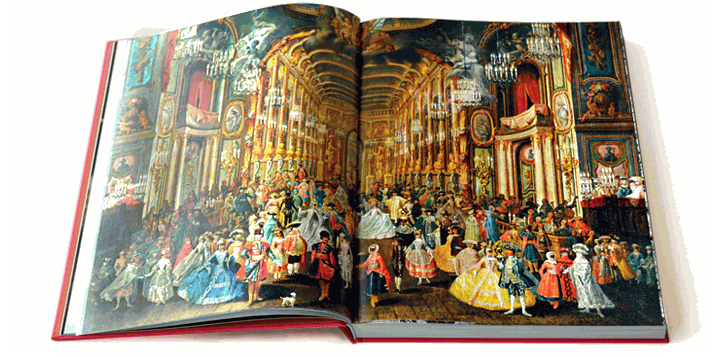
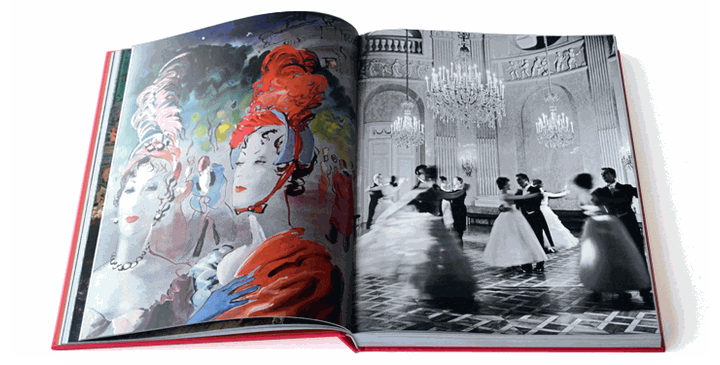
"From the twilight of the Romanov dynasty through the les annees folles of Art Deco Paris to the jet-set seventies, Bals explores the nine most exceptional private costume parties of the twentieth century."
-from the Assouline website


Though this title wouldn't have been my first choice (that's 'balls' in French, not a typo), I definitely want this book. I absolutely covet large picture-reference books. They are my favorite source of inspiration. There's something about turning the pages and feeling the weight of the book in your lap that makes the pictures seem even more special - not to mention the fact that resolution is almost never a problem! Here's a sneak peek of what to expect inside:


"Since the guests were asked to arrive in gondolas rather than in motor launches, the scenes outside as well as inside the palace... gave the impression of a Canaletto come to life." -Cecil Beaton, describing the scene at Don Carlos de Beistegui's 1951 ball in Venice's Palazzo Labia.


Basically, it looks like it will be a huge drool-fest for anyone who loves historical costumes as much as I do and would be a brilliant addition to any real-life library. Normally I would put a link to this product on the Amazon website since I've decided to whore myself out to them just a little (thus my lack of a tirade on the death of Borders), but this is actually a product that Amazon doesn't carry! So, instead click here to visit the Assouline website and purchase this beautiful book.

Farewell on this First Folio Friday,

Enhanced by Zemanta

Thursday, September 1, 2011

Viv Ayiti

When I first visited Haiti in May of last year I went with - among other things - the express purpose of coming back with a harrowing article for you all. Something about the cruelty of fate or the human condition. Like a CNN Special Report sans the Anderson Cooper. Yet, after an entire summer of contemplation and even a second visit, I still have very little I can say. My impressions and feelings are difficult to vocalize. Above all, Haiti is a melting pot filled with bizarre juxtapositions, contradictions and non-sequitors. Take, for instance, the man in the "Harvard Law" t-shirt who sells bread on the corner, or the lonely Domino's Pizza sign standing in front of a vacant field. Take Port-au-Prince, with a Colonial Church looming eerily over a neighboring tent town; Take the Texaco gas station in a city seemingly paved with built-in potholes.


Haiti is a bizarre dreamland where nothing quite is as it seems. It's like wearing a shoe and being unsure if it's too big or too small, or hearing a chord with a stray sour note. I am more than anything just flat out not sure what to make of it.


I remember sitting by the pool at my mother's house in P-A-P this past weekend. I happened to be staring vacantly at the wall that divided our and our neighbor's yards, and I suddenly noticed that the bricks weren't overlapping. It struck me as odd because I didn't understand what reason the builders would have for doing that... I don't believe it's that much cheaper to build walls like that, though I guess it might be slightly easier... If this was the standard for other construction it's no small wonder that the country was so completely devastated by a large-scale earthquake. Thankfully, after the earthquake the Embassy took the time to inspect all of their still-standing structures to make sure they were up to American code


One of the more festive shops...

Having had both parents assigned to Haiti and having visited twice, I've heard a lot of the stories of what happened during and before the earthquake. One woman had just received a guest into her home and was giving her tour. As they stepped out into the garden, the earth shook and the house collapsed behind them. In a different part of town the Embassy had rented out a two-story apartment complex. At the time of the earthquake this complex was empty; all of its residents were on shuttles headed home from school and work. They arrived to find their homes pancaked into the street. In a condo neighborhood just recently completed before the earthquake, witnesses reported watching the peripheral security wall wobble as if made out of Jell-O.


The country was already in such difficulties that this wrench in the gears should have just completely destroyed the machine. Hell, here in the "civilized" world we start riot over sporting events. Yet these people don't turn over your car in the street. One of the major problems during the earthquake relief effort was that the tent cities being built in and around Port-au-Prince were being populated by people who hadn't lost their homes in the disaster. They saw food and shelter being given out on a daily basis and decided to take advantage of the situation, cheating those who most needed the aide. I don't consider them to be bad people. It was simply a matter of desperation

"Jesus Christ is coming to take the chosen ones, 21 May 2011"

What truly left me in awe after my visit was the resignation of the Haitian people. I spoke to a middle-class Haitian who jokingly said they "only complain when things are good". Where they find the strength to wake up every morning and say, "I'm going to go out into the streets and walk until I sell all of these mangoes," is a complete mystery to me. Their faith is certainly strong. That's easy to see in the names they give their "buses", which they call "tap-taps" and are any variety of re-purposed auto, most commonly a pick-up truck with an added seating area. "Merci Man Man Marie" (Thank You Mother Mary), "Dieux Tout Capab" (All-Capable God), and "Romains 12 v12" (Romans 12:12). These names also find a place in the huge grass-roots lottery industry - another sign of their faith in Fortuna.

"Be joyful in hope, patient in affliction, faithful in prayer."

I think that quote really sums up the Haitian people right there. They are proud, faithful, and resigned to do their best in their circumstances, and their situation doesn't seem to be getting much better, even with a new President. Martelly has expressed his frustrations with the Haitian government, where funds to build housing for the poor are locked away, but he could immediately begin work on a summer home for himself if he so chose. Haiti is basically run by twelve wealthy families who control the government and all major industry in the country. It's a modern-day oligarchy with a Democratic mask - and what a mask! Members of the Haitian Congress receive a salary of $10,000 US per month, which you can imagine is an obscene amount of money to have in a country so poor.


What's even more bizarre is the series of contributions Haiti has made to History that few are even aware of. Infamous buccaneer Jean LaFitte was born in Port-au-Prince around 1782 - he would later be largely influential in helping us win the War of 1812 in the Battle of New Orleans. Haiti gave Simón Bolívar the military and financial assistance that may have made all the difference in his fight to liberate New Granada (which we know today as the countries of Colombia, Ecuador, Panama, and Venezuela). Throughout the 60s and 70s, Haitian doctors, professors, and other intellectuals who fled the tyrannical rule of François "Papa Doc" Duvalier contributed significantly to the development of former French colonies in Africa. So, what happened to Haiti?

The hole in the middle of the square was once a police booth, torn down because it was haunted.

Consider their Eastern neighbor, the Dominican Republic. Comparing Gross Domestic Product, The DR comes in at around $93 Billion, while Haiti trails behind at not quite $11 Billion. Haiti is nearly half the size of its neighbor but has a slightly higher population. On the Human Development Index (which measures relative living standards), the DR scores 0.663 (medium) and Haiti only 0.404 (low). I think ultimately the problems stemmed from squabbling factions and the country's inability to maintain the economic strength it had before its independence that was supported by the 90% slave population.


Of course, we could sit here and ponder and muse all day long over the reasons for Haiti's trouble and still the people of Haiti would be living in tents. The most we can do is support programs that help Haitians and others like them around the world. Ultimately, though, it's up to the Haitian people to take fate into their own hands, because no amount of international intervention can change the hearts of a people resigned.


There is a popular Haitian proverb that says "Dye mon, gen mon," behind every mountain is another mountain. It means that no matter how many obstacles we overcome, there will always be more to face in the future. Perhaps it's not about fighting the circumstances you're in, but about making the best of them, and perhaps, in that sense, the Haitian people have it all right?


Sunday, December 5, 2010

The Supersizers - Review

As you all know, I'm a complete history voyeur. I get a strange thrill out of even the slightest insight into the lives of periods past. Well, I've once again been lucky enough to stumble onto another delightful series on Youtube. The wonders of the internet never cease to amaze me. This show is called Supersizers, a BBC Series originally filmed as part of a series of programs on Edwardian England. The show was so popular, however, that Supersizers Giles Coren (Food critic) and Sue Perkins (Comedienne) ended up doing around 12 episodes on a wide range of time periods, from the Roman Empire through the 1980s. This is the first part of one of the episodes - The Supersizers Go Elizabethan!


Now, you might be surprised that I like it. The show is no stickler for historical accuracy outside of the food. However, it brings a freshness to history that many television shows lack. Perkins and Coren don't pretend to like the food or customs they endure. They poke fun at what they go through, but they still have a sense of respect for the history.

I must warn you: if you are a vegetarian for moral reasons or are otherwise sensitive to any sort of visual carnage, be prepared to shield your eyes during the cooking sequences.


You'll definitely be hearing more about this series!


Bon Appétit!
Nostalgically Yours


PS: Doesn't Giles Coren look positively delectable in that Jerkin?

Thursday, October 28, 2010

I Don't Understand this Obsession With Men and Their Balls...

No, this not a post about rude jokes through the ages - a new episode of "Sex and the Austin Girl" has just gone up on Babelgum! This week: Sports!


I'd also like to take a second to thank the folks over at The Jane Austen Addict Website for publishing my review on their Press Page! It's quite an honor to be published on such an accomplished author's website. Do give them your traffic if you've got a moment or two - the website will give you information on how to enter for a chance to win copies of Laurie Viera Rigler's books:


Do enjoy the show - and the books!

Nostalgically Yours

Saturday, September 25, 2010

Hindsight - Not Your Momma's Platform Heels!

“Fashion is a form of ugliness so intolerable that we have to alter it every six months.” -Oscar Wilde


Today I introduce yet another segment. As you may have deduced from the quote featured above, I will use "Hindsight" to discuss the amazing and peculiar trends of days gone by which, in retrospect, might seem a bit silly.

As I'm sure many of you know, Lady Gaga has had mixed reviews about her wardrobe for this year's MTV Video Music Awards, including a dress made of raw meat (not pictured) and a pair of Alexander McQueen's signature "Armadillo" shoes:


I've heard many complaints about these heels - though I quite honestly think she deserves praise for putting on these babies - but let's take a trip back in time and explore the history of the chopine.


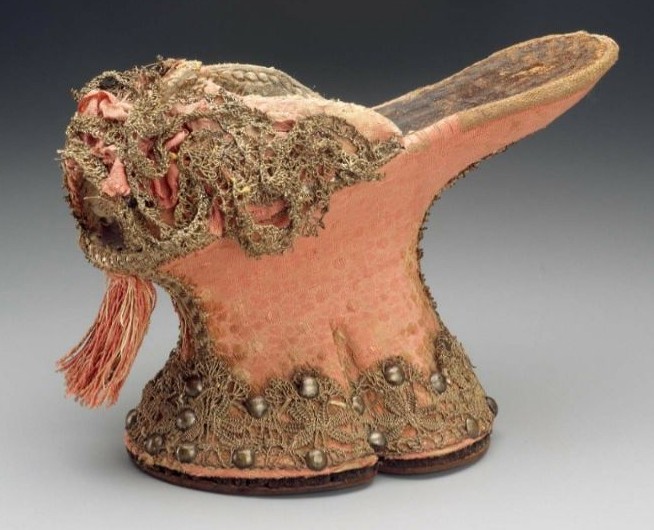
Chopines (or Zoccoli, as they were called in olden days) were platformed over-shoes that became popular towards the end of the Dark Ages in Renaissance Europe. Originally intended to keep the hem of a lady's dress from dragging in the mud, the chopine (and the added height given by it) became a status symbol. They were most popular in Spain and parts of Italy - Venice and Florence, specifically - and hit their highest in the 17th century.

For all intents and purposes, you might be wondering exactly why these are a trend we would look back upon and ridicule, especially when compared to McQueen's "Armadillos". Here is why:


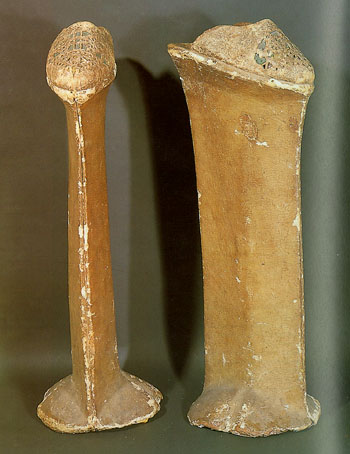
These zoccoli are around 20 inches tall! To say that these over-(the top)-shoes were impractical would be a gross understatement. In fact, the women who wore these gargantuan things needed attendants to walk with them in order to keep their balance. The fashion was often ridiculed in literature of the time, as evidenced by this "smutty" caricature:


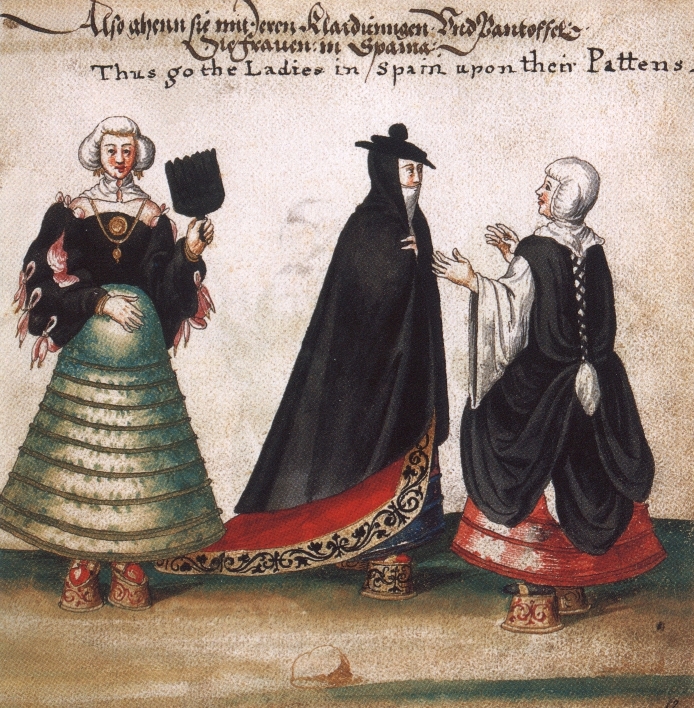
Contrary to what this drawing presents, there is some conjecture as to whether or not a lady's skirts would have covered the chopines... Here's an example of women who showed off their zoccoli:


Notice how these Spanish women all leave their chopines clearly visible beneath their ringed "verdugado" skirts (to clarify, these women are fully clothed - these earliest known ancestors to the hoop skirt and cage crinoline featured the wooden hoops in the outermost skirt). Clearly different women chose to wear them in different ways. I think the most  obvious way to tell if a certain zoccoli was covered or not is to look at how ornate the decoration is. Of the following two examples, the first would probably have been covered by the skirt whereas the second, more delicate example may have been worn to a ball or party and might have been proudly displayed - after all, they were a status symbol.


Of course, the fact that it was a status symbol is also a matter of debate amongst experts. Some say that only Venetian courtesans wore these high over-shoes to make themselves more visible to clients. Others say that zoccoli were reserved for the most prominent female Venetians. Much like Francis Classe, I believe that both women would have worn these shoes, considering the lavish gifts Venetian men would have had to lay upon their courtesans to keep their interest, and then on their wives to keep them quiet. It's not too difficult to imagine a great social battle between the Ladies and Mistresses of Venice... Female competition is the only logical explanation I can think of that might lead to 20-inch chopines.


Hope this was insightful and entertaining - and hey, maybe next time you complain about the four-inch heels you wore to go clubbing you'll remember what these women endured for fashion!

Hoping sincerely that none of your are ever subjected to such tremendous heels,
Nostalgically Yours


Thanks to the following sources for information and pictures:
Francis Classe
Museum of Fine Arts Boston
Metropolitan Museum of Art New York
Enhanced by Zemanta

Thursday, September 23, 2010

Mythology or Fact?


The Bull-leaping Fresco from the palace at Knossos, Crete


This week in my Art History class I learned about the Aegean Civilizations of the Bronze Age. The Aegean were the civilizations that populated modern day mainland Greece (Mycenaean), modern day Crete (Minoan), and the islands in between (Cycladic). Of course, Greek Mythology is a vivid source of inspiration for writers, designers, and artists of all types, but more and more discoveries in archeology point to the fact that many myths have a basis in fact.

For instance, most everyone knows the myth of the Trojan Horse, but archeologists have discovered a city that matches the descriptions of the Homeric Epic.

The Minoans were a relatively peaceful, seafaring people. Their palaces were lavishly decorated with beautiful frescoes (such as the one pictured above) and ornate sculptures and pottery (pictured below).


As is clear from the sculpture above and an artist's rendering below, the Minoan woman's wardrobe consisted of an open-fronted bodice and a layered skirt in many bright colors. Upper class Minoan women were women of leisure, and lived in the lap of luxury. Women enjoyed many rights rarely seen in other cultures of the time, including serving as priestesses. Their open bodices indicate the liberal views towards them, and the respect held for their life-giving properties.


Minoan Palace Scene by Thomas Baker


One of the many entertainments offered the Minoan court at Knossos would have been athletic events such as those pictured in the Bull-leaping Fresco. There were different types of bull-leaping, but the one pictured above is seen in the diagram below. The athlete would face the charging bull, grab onto the horns and - as the bull reared its head - would perform a somersault, leap off the bull's back, and finally land behind the bull. Pretty damn impressive, if you ask me. It has been suggested that many modern men's gymnastic events, such as the pommel horse, the vault, and the still rings have their origins in this ancient art.


If you're aware of the myth of Theseus and the Minotaur, you might be thinking this seems like a bit of a coincidence. Remember, King Minos (for whom the Minoan Civilization was named) did have his palace at Knossos. Though a labyrinth has never been discovered anywhere on or near the sight, take a look at this plan of the ruins and an artist's reconstruction:


Some archeologists have suggested that Homer's mythological labyrinth may have been inspired by the Palace itself. That courtyard you see in the pictures was where the Bull-leaping was held. Perhaps the legend of Theseus battling the Minotaur were, in fact, an exaggeration of a real boy's trials to travel from Athens to Crete to compete against the Minoan Bull-leapers.

Ultimately, it is widely believed that the Minoans met their demise after a major volcanic eruption on Santorini. Apparently this was one of the biggest eruptions in recorded history. This eventual demise is also considered one of the inspirations for the Atlantis myth.

I find these sorts of things absolutely fascinating. It is no small leap of faith to think that myths could be based on actual facts. In the years that go by, and in an era where people fully believed in magic and a whole Pantheon of vengeful gods, stories are naturally misinterpreted and purposefully exaggerated to glorify or vilify historical figures or people. Also, in an era where kings ruled without the reigns of a parliament, parables and myths would have been the only way for people to speak their minds about the misdoings of royalty.

It's also not hard to believe that we ourselves may have misinterpreted certain things about these cultures and their stories. Some of these cultures have words that mean both "king" and "god". Many cultures worshiped their leaders as deities, so perhaps the entire pantheon of gods and all of those myths are based on real kings and queens of yore. I would be completely fascinated to learn about these people. History is one of my greatest passions. I'd be an archeologist I weren't so lazy...!

"Historical sense and poetic sense should not, in the end, be contradictory, for if poetry is the little myth we make, history is the big myth we live, and in our living, constantly remake."
-Robert Penn Warren


Nostalgically Yours