Showing posts with label 19th century. Show all posts

Friday, June 15, 2012

Fashion Friday - Give Three-Piece a Chance

Last month a protest was held on the famous Saville Row. Several hundred people took to the street to protest the encroaching of Abercrombie & Fitch upon one of the most Venerable Institutions of the Fashion Industry. Unfortunately, this protest - or the cause of it, rather - heralds the final chapter of the Age of Couture.


This all started at the end of the 19th century, with a man named Charles Dana Gibson. Gibson was a turn of the century illustrator, and while he didn't invent the styles of the 1890s and 1900s, he is widely credited with popularizing the look we now know as the "Gibson Girl". This might not have been revolutionary. It might have been simply the latest in the series of fashionable changes to Victorian dress, except for one thing: for the first time in history it became fashionable for women to wear separates.


Before then, stylish ladies had worn dresses almost exclusively. This had left dressmaking in the exclusive realm of individual tailors and seamstresses, as the corseted and bustled figures made standardized sizing and mass-manufacturing impossible. The only people who bought pre-made clothing were sailors and other workmen who didn't have any family to make them clothes. This was looked down upon by the upper classes. While Sears-Roebuck and others also produced clothing for their catalogues, these, too, were considered déclassé.

With the arrival of these fashionable separate skirts and blouses (then known as shirtwaists), standardized measurements and mass production became not only a possibility but a reality. Manufacturers began popping up all over major cities - you may have heard of the Triangle Shirtwaist Factory Fire.
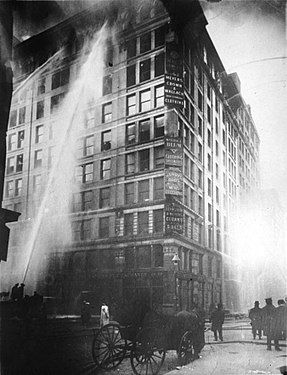


Ready-to-wear slowly pushed it's way to the forefront of culture and society, and got special boosts with each of the world wars. However, couture was still king in the fashionable circles. Wealthy women still traveled to Paris each season to purchase new gowns, dresses, suits, etc.
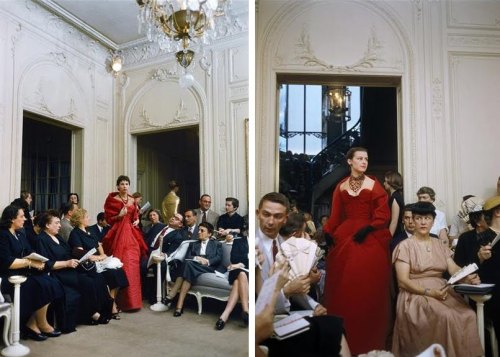
A Dior Haute Couture Show, 1950s
The next part of the story begins on October 23rd, 1957. Christian Dior, the toast of Paris, dies of a heart attack while on vacation in Montecatini, Italy. In his wake, Yves Saint-Laurent is tapped to take over the fashion juggernaut that is Dior. However, after only a few years, the investors butt heads with the young designer purposefully fail to have him excused from his military conscription. After several years of struggles with military service, doctors, and drugs, Saint-Laurent pulled himself together and in 1966 announced a ready-to-wear line. While other designers also had prêt-à-porter lines in the works, YSL is greatly credited with being the first due to his strong ideas on the subject of democratizing fashion. Saint-Laurent's Rive Gauche stores were a huge success, and this spelled the beginning of the end for couture.
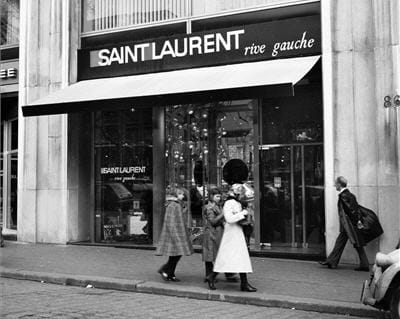

It's interesting to note that it was around this time that the miniskirt came into fashion. This is widely considered to have been the last major fashion trend. Nothing since has been so widely pervasive as the miniskirt, and it heralded the end of institutionalized fashion, where Parisian couturiers dictated the styles to the masses.


Nowadays, design companies lose money on their couture lines, and they are becoming less and less prevalent as the shows become too expensive to produce and as more and more of the artisans and craftspeople who provided lace, feathers, beading, and all of that to the design houses fold due to economic hardship. In spite of this, Saville Row has remained a bastion of bespoke against the rising tide of ready-to-wear. The tailors and seamstresses of Saville Row resent that a fast fashion company such as Abercrombie & Fitch would trespass onto what is effectively the Vatican of tailoring, and consider it both disrespectful and an economic threat.


However, will their cries be ignored? Will the suit-makers of Saville Row be swallowed up by fast fashion the way Barnes & Noble or Starbucks swallowed up so many businesses before them? Will centuries of experience and incomparable quality be replaced by lower prices and quick turn-around times? I believe they will, sadly. They simply cannot compete in a society that holds price above all other aspects of a product. I hope they'll stick around for a while yet, and at the very least live to preserve their wisdom for posterity.

Monday, May 21, 2012

Macabre Mondays/Tableau Tuesdays - Draw This Dress and More

Please note that all artwork shown in this article is the intellectual property of Misses Carroll and Bee, and is used here fully crediting them as the creators thereof.


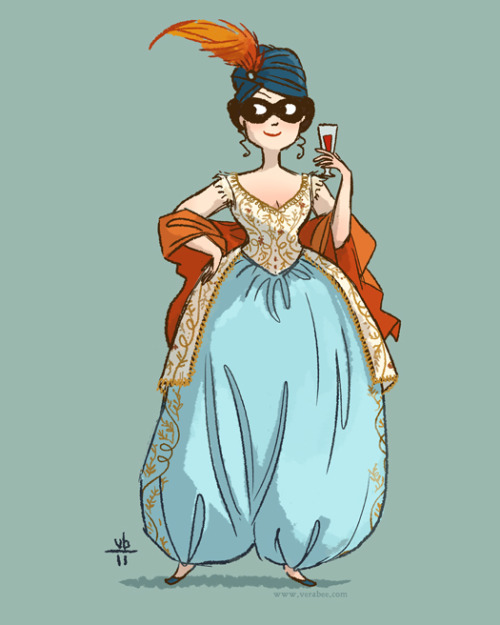
I recently stumbled onto a very, very interesting Tumblr: Draw This Dress, where the incredibly talented duo of Emily Carroll and Vera Bee get together and draw beautiful garments from bygone eras. Here are some examples:


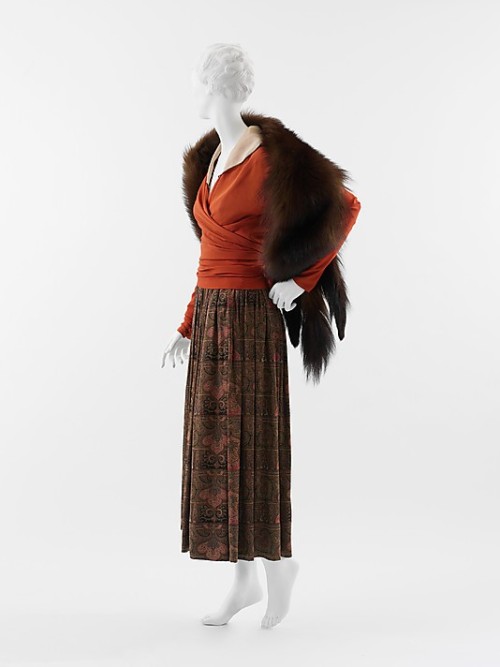
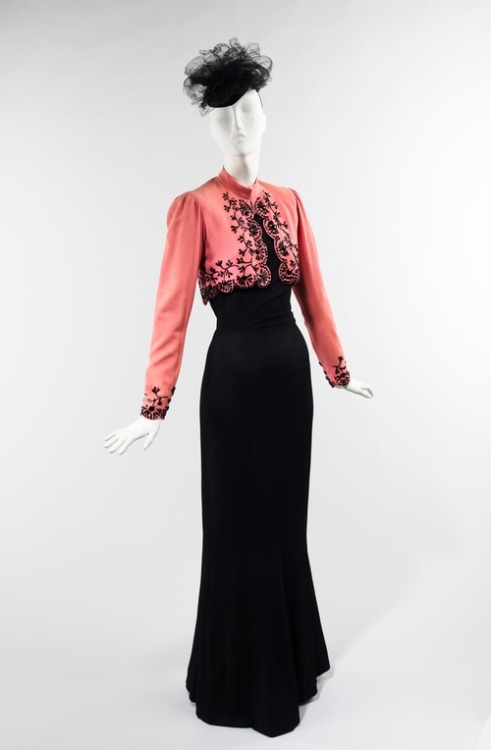
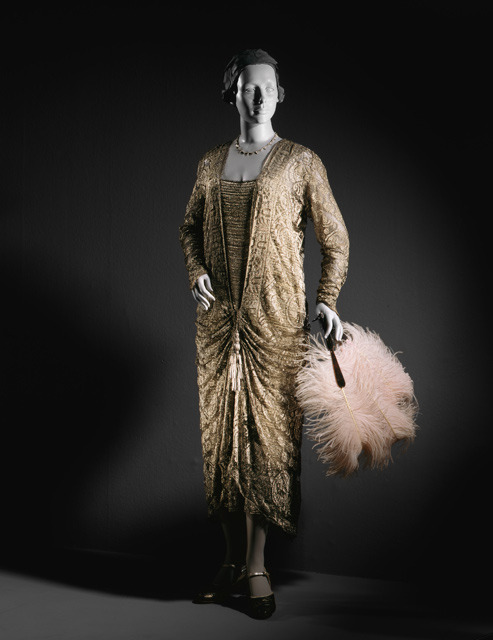
Stunning. It's one of those things that just turns me green with envy at the sheer talent of these women, but I'm sure you're wondering why I called this "Macabre Monday" if I was just going to show you a bunch of pretty dresses - well, I'll get to that soon enough. If you have the time, also check out the sites they used for reference, such as Ye Olde Fashion or OMG! That Dress!. They have tons of amazing vintage and antique clothing for you to ogle, drool over, put into your swipe files, or what have you.

Like This one.
Or this one.
Or this one!
OR THIS ONE!!!
Vera Bee's website contains lots of beautiful artwork and a rather bizarre animation, but it was Emily Carroll's site that really dragged me down the rabbit hole of the macabre. Most of you are probably familiar with fairy tales, and because of movies like The Brothers Grimm or television shows like Once Upon a Time many of you will probably be familiar with the much darker origin of the fairy tale; stories told to young children to basically scare them into behaving. These were the original Goosebumps.

Wait for it. Here comes the macabre. If you know about these uber-macabre stories (for instance, how the Little Mermaid actually tries to stab her prince, or how Sleeping Beauty's mother-in-law was actually an Ogress who repeatedly tries to eat her grandchildren), and still enjoy them, I strongly encourage you to check out the Comics page on Carroll's website. However, these are not for the faint of heart or stomach. You have been warned. Check out Carroll's amazing comics here. Hope you all had a lovely weekend!

Monday, April 23, 2012

Afternoon Animations - A Gentlemen's Duel

I'm trying to be a little bit more liberal about what I post here. I used to have a bit of a hang-up about simply sharing content created by other people, but I'm starting to realize that I'm just missing the opportunity to share some really great stuff with you, dear readers. Therefore, here is a truly delightful Blur Studio animation I found - A little something for the Steampunk aficionados out there:


Tuesday, February 14, 2012

Happy Anna Howard Shaw Day!

I've got a whole bunch of ideas lined up for you guys, but more on those later this week. Today is - you guessed it - Valentine's Day; the day where sweethearts express their love through greetings cards, candy, and flowers!

Nothing like plant genitalia to get you in the mood, am I right? (via)
I figured I'd go the route I've gone for other Holidays and do a retrospective on the history of this "love"-ly day. The feast of St. Valentine was first established by Pope Gelasius I in 469 AD. This feast celebrated only two of many Saints named Valentine; most of whom were persecuted and invariably martyred at the hands of those crazy Pagans: the Romans!

I'm in the mood for looooooove... (via)
Sexy, right? Actually Valentine's Day didn't get its Romantic context until almost a thousand years later in Medieval Europe. The earliest known written link between St. Valentine's Day and Romantic Love is found in the works of Geoffrey Chaucer in the 14th century, when Courtly Love was all the rage.

Porno music not included (via)
Of course, nothing in history is that simple. The true origins of modern Valentine's Day are pretty much unknown to us. I'm sure at least some of you have heard the story of Saint Valentine writing the first Valentine to the blind daughter of his jailer, which apparently made her see again. This has never been historically attested and has probably been attributed to all the different Saints named Valentine in turn.

"In other words, we haven't the foggiest." (via)
Some even speculate that Valentine's Day's romantic connotations were a rediscovery of Ancient Roman and Greek festivals such as Lupercalia, a festival which was supposed to cleanse the City of Rome of evil spirits to promote prosperity in the coming year, and Gamelion, a month set aside by Athenians to honor the sacred marriage of Zeus and Hera. However, these pagan festivities had more to do with ritual sacrifice than Romantic Love...

Isn't it romaaaaaaaaaaaaantiiiiiiiic? (via)

Anyway, somewhere in the Middle Ages people made up an excuse to send each other love letters because, really, what else was there to do in Medieval Europe? Also, considering the little Ice Age that gripped the Western World, February would have been the point in winter where the cabin (or 'castle') fever would have been too much to bear and people would have seriously needed an excuse to take off their clothes. So, that's how it all got started (kind of). The earliest surviving modern 'Valentine' was written by Charles, Duke of Orleans during his captivity in the Tower of London after the Battle of Agincourt. You can read it here.

He's got on his "do-me" robes. (via)
As time passed and industry grew, people began taking advantage of this holiday to sell pre-made Valentines to the Western public. It really picked up here in the United States and in England around the turn of the 19th Century - and paved the way for the commercialization of other holidays. Many entrepreneurs found success in the Valentine business, including Esther Howland:

"Wedding now are all the go,
will you marry me or no?" (via)
The 20th century brought mass-produced cards known as "mechanical Valentines" and with the rise of advertising in post-war America, the typical Valentine's Day shopping list expanded to include candy, toys, flowers, eventually jewelry. Today it is estimated that around one billion Valentine's Day cards are exchanged every year, with teachers receiving the most.

Next Year? Your SOUL. (via)
Of course, no Holiday this commercialized could go without its critics. Vinegar Valentines - generally mean-spirited insult cards - have been around as long as people have been able to buy regular Valentines. In probably the most famous instance of Vinegar Valentines, Calvin of "Calvin and Hobbes" regularly sends these to Susie in order to hide his true feelings from her:

(via)
Others still choose to ignore the holiday altogether:


However you choose to celebrate this day (be it a ritual sacrifice, vinegar valentine, or oral surgery) a very happy Valentine's Day to you and yours.